
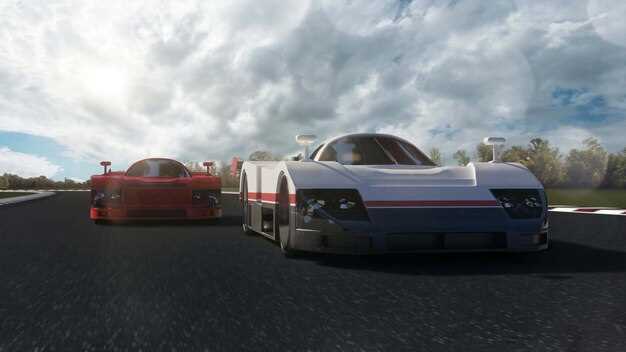
The BMW M division has long been synonymous with motorsport excellence, combining performance, precision, and passion to create a legacy that transcends generations. From the inception of the original M1 to the present-day high-performance variants, each model tells a story of innovation and dedication to the art of driving. The influence of these M models has reshaped the landscape of sports cars, establishing benchmarks in speed, engineering, and style.
As we delve into the world of BMW M, we will explore how each iteration not only reflects the changing dynamics of the automotive industry but also honors the brand’s rich history in motorsport. The M models are more than just cars; they represent BMW’s relentless pursuit of perfection and their commitment to delivering exhilarating driving experiences. From the track to the road, the legacy of each model resonates with enthusiasts and casual drivers alike.
Join us as we journey through time, examining the iconic BMW M models, their impact on both motorsport culture and the automotive world, and what makes each vehicle a crucial part of the ongoing M narrative. From the groundbreaking design of the M1 to the latest technological marvels bearing the M badge, each model showcases BMW’s unyielding dedication to performance and innovation.
Understanding the Evolution of BMW M Models: Key Features and Innovations
The BMW M series has cultivated a rich legacy that transcends mere performance. From the iconic M1 to the latest entries, each model has embodied innovations that reflect advancements in motorsport technologies and engineering precision. The journey through the BMW M lineup reveals a commitment to balancing power, agility, and everyday usability.
Starting with the M1, launched in the late 1970s, it set the stage for BMW’s foray into the high-performance market. This model introduced a lightweight design and a mid-engine layout, which became a hallmark for subsequent M models. The M1’s successful integration of motorsport techniques into a road-legal car paved the way for the legendary M series.
As the series evolved, BMW consistently integrated cutting-edge technology. The introduction of the M3 in the 1980s marked a key moment, as it combined a high-revving inline-six engine with a focus on handling dynamics, establishing the M3 as a benchmark for sport sedans. This model also showcased the use of near-industry-leading aerodynamics and lightweight materials, optimizing performance on both the track and the street.
The 1990s brought significant changes with the M5, which featured the first V8 engine in an M model, marrying brute power with luxury. The innovations in this model included advanced electronic systems that enhanced driving dynamics, a feature that continues in modern iterations. Each new M generation has built upon its predecessors, refining elements like suspension technology, engine management systems, and driver assistance features.
In the 21st century, BMW has pushed the envelope of performance engineering with models like the M4 and M8. The introduction of turbocharged engines has transformed power delivery while enhancing fuel efficiency. The use of lightweight chassis and improved aerodynamics has further revolutionized how these vehicles perform on the road and track.
The legacy of the BMW M series is not just about horsepower; it’s a testament to continual improvement, illustrating how racing heritage informs road-going innovations. Each model reflects an ongoing dialogue between motorsport excellence and everyday practicality, ensuring that BMW M models remain at the pinnacle of performance automobiles.
Impact of Motorsport on the Development of BMW M Series Performance

The influence of motorsport on the evolution of the BMW M Series is profound and integral to its identity. From the very inception of the M division, BMW recognized the significance of competitive racing as a catalyst for innovation. The lessons learned on the racetrack have translated directly into enhancements in technology, design, and engineering for the M series.
The BMW M1, launched in 1978, marked the brand’s proactive entry into motorsport. Its development was driven by the need for a car that could compete in Group 4 racing. Engineering solutions applied during its development laid the groundwork for future models, ensuring that performance and aerodynamics were prioritized. This principle has remained a cornerstone across the series, with each subsequent model benefiting from competitive insights.
As BMW’s involvement in motorsport deepened, particularly in touring car and endurance racing, the technologies refined on the track became essential elements in M series vehicles. For instance, advancements in suspension systems, braking technologies, and engine tuning, initially designed for racing applications, have been adapted for street-legal vehicles, enhancing their performance and driving dynamics.
The introduction of the M3 in the early 1980s further illustrated this connection between motorsport and road cars. Designed as a homologation special for Group A racing, the M3 incorporated lightweight materials and powerful, high-revving engines that set new benchmarks in the sport-sedan segment. Each generation of the M3 has continued to incorporate lessons learned from motorsport, ensuring that these cars remain at the forefront of performance.
Recent models, such as the BMW M5 and M8, showcase advanced technologies like all-wheel drive systems and adaptive suspension, which were developed through rigorous testing in competitive environments. These innovations were meticulously fine-tuned through motorsport applications, allowing them to excel both on the track and on public roads.
In conclusion, the unwavering commitment to motorsport has significantly shaped the BMW M Series. The drive for competitive success not only enhances performance but also ensures that each model remains a testament to BMW’s engineering prowess, delivering thrilling driving experiences rooted in racing heritage.
Comparative Analysis of Iconic BMW M Models: M1 Through M4 and Beyond

The journey of BMW M models began with the M1, a groundbreaking sports car that set the standard for performance and motorsport pedigree. Introduced in 1978, the M1 combined a mid-engine layout with a racing-inspired design, showcasing BMW’s commitment to high performance. Its legacy as the first M model established a foundation that would influence subsequent generations.
Following the M1, the BMW M3 was launched in 1982, heralding a new era of performance sedans. The M3 quickly became synonymous with motorsport, boasting lightweight construction and powerful inline-six engines. The evolution through various generations, including the E30 and E46, showcased advancements in technology and engineering, while maintaining the core essence of excitement and agility. Each model contributed significantly to M’s legacy, achieving critical acclaim both on the track and in car culture.
The transition to the M4, introduced in 2014, marked a shift towards a more refined approach in design and performance. While the M4 retained the high-performance characteristics of its M3 predecessor, the coupe variant introduced a more aggressive aesthetic and enhanced aerodynamic efficiency. With turbocharged engines and advanced suspension systems, the M4 embodies modern automotive engineering while honoring the rich heritage established by the M1 and M3.
In addition to their individual characteristics, a comparative analysis reveals a consistent emphasis on lightweight materials, balanced handling, and powerful engines across these models. The evolution of BMW M reflects not only changes in consumer preferences but also a relentless pursuit of motorsport excellence, ensuring the brand’s legacy remains vibrant.
As BMW continues to innovate, future M models will undoubtedly draw inspiration from the iconic lineage of the M1 through M4. This enduring legacy, rooted in high performance and motorsport success, sets the stage for the next chapter in BMW’s storied history.